
No Victims Here
Where Injustice is Real but Harm is an Illusion

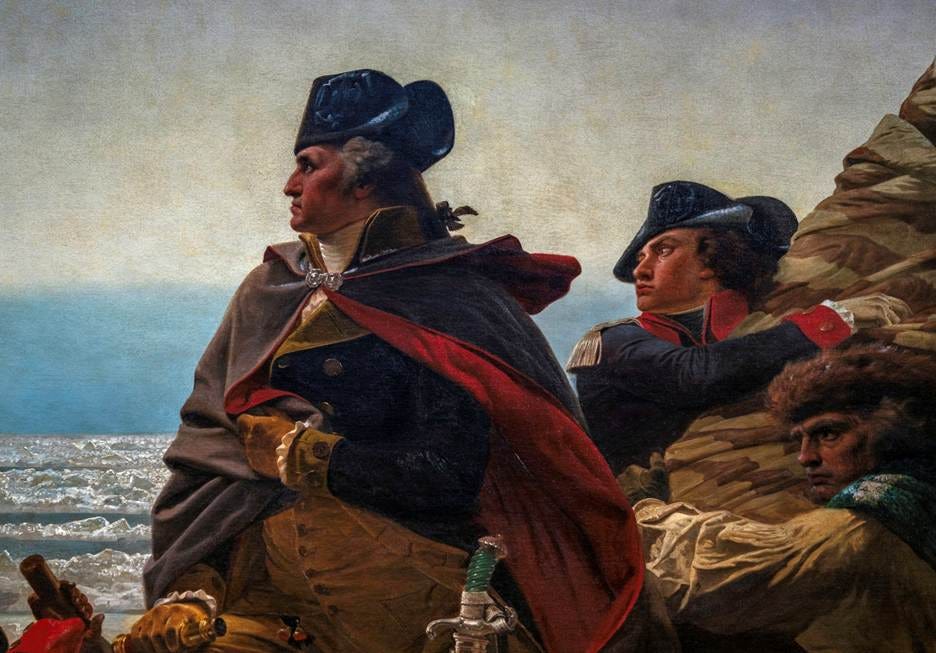
A victim mentality is cancer. In organizational life, it spreads quickly and corrupts everything it touches. A crew that reflexively sees itself as acted upon will not adapt, will not correct errors, and will not win. Deficiencies will be attributed to bad luck, higher authority, or incompetent counterparts, and in these unventilated recesses they will fester and compound. Comfort and ego will be preserved, at least temporarily, while catastrophic failure quietly approaches.
High‑stakes organizations are internally relentless in countering this impulse. In the debrief, we spend little time discussing what we did well, unless it teaches or confirms something we did not already know. We focus instead on where we fell short, such that we may effect action to correct it. We attack one another’s theories and expose excuses. As a matter of professional honor, we do not take it personally. We know why it has to be this way. Improvement requires ownership. Survival requires continuous improvement.
The same dynamic that corrodes organizations subsists within the individual. Chronic victimhood will destroy a person just as surely as it will a crew. Academics give it technical names—“learned helplessness” or “external locus of control” for example—and the data show exactly the outcomes you’d expect: higher rates of depression and anxiety, lower academic and professional achievement, reduced persistence in the face of setbacks.1 But we do not need clinical evidence to tell us that refusing responsibility creates failure; these lessons have been retold since Homer penned The Odyssey. These are intuitive social principles that transcend cultures and centuries.
The logical corrective is to press deliberately in the opposite direction. We teach our children not to make excuses. We require students to stand by their work. We advise new employees to own their mistakes and ask what could have been done differently. Nowhere is this imperative more acute than military culture. Admiral or Ensign, one assumes responsibility for everything in one’s sphere, regardless of whether it is fully one’s to control.
The Stoic philosopher Epictetus responds to the victim mentality with all the tenderness of a drill instructor: “No, but you sit there trembling at the thought that certain things may come about, and wailing, grieving, and groaning at others that do come about, and then you cast blame on the gods.”2 He can seem like a bastard at times, but the intolerance in Epictetus’s tone should not be mistaken for malevolence: this is someone who cares about the individual. This is someone who wants one’s best.
Compare the severity of Epictetus with those who trade in victim narratives. All “sides” of social discourse feature those whose ends are served by amplifying resentment. The merchants of grievance have little use for anyone’s best self; what they seek are the embattled, the injured, the enraged and wailing—someone conditioned to feel acted upon. Someone easily manipulated.
The velvet blanket of affirmation is warm, especially as compared to the burlap cloak of Stoicism. One may say of the grievance-peddler, “but he speaks the truth of my exploitation!” Perhaps. Just ask yourself this: If I am venturing into hardship and danger, from whose school would I rather recruit my traveling companions? Whose school, then, would make a better me?
If we are deliberate about the kind of people we wish to become—and the kind we hope to create by our examples and institutions—then we should confidently uphold responsibility as a social norm. Likewise, we should instinctively recognize victim narratives as poisonous (no ideological alignment is required, for every camp indulges them and each is diminished thereby). Stoicism, the philosophy of Epictetus, presents an uncompromising model for the rejection of victimhood which goes well beyond traditional rhetoric about personal responsibility. The Stoic account is rigorous, controversial, and more than a little unsettling. It is, however, entirely coherent. What follows, then, is an attempt to clarify the Stoic take on victimhood.
Give me just one young man who has come to the school with this aim in mind, who has become an athlete in this field of action, and declares, “I for my part bid farewell to all the rest; it is enough for me to live my life free from hindrance and distress, and to be able to hold my head high in the face of events, like a free person and to look up to heaven like a friend of God, showing no fear of anything that could come about.”3
How it Works
A brief review of the mechanics is appropriate. The keystone concept of Stoicism is the preeminence of virtue. “Virtue is the sole good,” as they say—and by “good” they mean that which is genuinely beneficial for the person and pursuit-worthy. Everything else follows from this claim. If virtue alone is good, then vice—its antithesis—is the only true evil. External events may be pleasant or painful, advantageous or inconvenient, but if one’s moral integrity remains intact, nothing truly bad has occurred. Conversely, if one’s character is compromised, something genuinely harmful has taken place, regardless of outward comfort or success.
From this framework flows the Stoic account of emotion. The proper response to any situation depends upon whether one grants or withholds assent to the impressions that arise. A verbal insult, for example, presents itself as an injury. If I am disturbed by it, I have assented to the impression that I have been harmed. Yet on Stoic terms the insult is merely sound in the air; the only harm possible is the surrender of my own judgment. As Marcus Aurelius writes, “Remove the belief that ‘I have been harmed,’ and the harm is removed.”4
This seems reasonable enough on its face, but it becomes harder to accept as injustice escalates. If I am robbed, withholding assent to the impression of harm does not return my money, and if I am imprisoned, it does not set me free… at least not in the physical sense. But if I truly accept the premise that virtue is the sole good, then such things as money and physical freedom are trifles, where true freedom is internal to the soul. Witness Epictetus:
If you wish it, you are free; if you wish it, you’ll find fault with no one, you’ll cast blame on no one, and everything that comes about will do so in accordance with your own will and that of God.5
Implicitly, those latter two would agree, as the Stoic desires nothing that fate would deny.
Injustice is Real, Harm is Illusory
None of this is to deny that injustice occurs. A lie is still a lie, a theft is still a theft, and guilt is still incurred. In the Stoic view, however, crimes are separate from outcomes. As Seneca writes, “We declare that a wise man cannot receive an injury; yet, if a man hits him with his fist, that man will be found guilty of doing him an injury.”6 The wrongdoer’s guilt is his own. In the words of Marcus Aurelius, “if he did wrong, that’s his problem.”7 Not to be reduced by the crime of another—that’s our problem.
It isn’t just that the Stoic’s character survives injury; it is that no injury has occurred at all, because “I,” properly understood, cannot be harmed by anything external. This can be a tough pill to swallow, but it’s essential to comprehend if we want to say something about the Stoic view of injustice.
A Stoic would say that what is not within my power or “up to me” is not me; it is “external” to what I should properly understand as myself. Despite my best efforts, even my physical body is not within my power (just try not to age if you don’t believe me). But if I am not my physical body, then what am I?
I am what is internal. My character, my will, my capacity for decision—all of these are encompassed in one super-concept that is most often translated as “moral choice.” The Stoics would say I am this force and nothing else. As Epictetus puts it, “For you yourself are neither flesh nor hair, but choice, and if you render that beautiful, then you yourself will be beautiful.”8 This faculty of choice is unreachable by any external antagonist or oppressor:
So when a tyrant makes threats and summons me, I ask, ‘what is he threatening?’ If he says, ‘I’ll throw you into chains,’ I’ll reply, ‘Then it is my hands and feet that he is threatening.’ If he says, ‘I’ll have you beheaded,’ I’ll reply, ‘Then it is my head that he is threatening.’ If he says, ‘I’ll throw you into prison,’ I’ll reply, ‘Then it is my whole miserable carcass.’9
Injustice, then, can only harm the perpetrator. If I interpret an injustice as harmful to me, then it is I who have harmed myself. That is not to say I am responsible for the injustice. Assuming responsibility for our own happiness is not the same as blaming ourselves for every event that affects us. What remains ours—what is “up to us”—is whether we add distress to the event. In this spirit, Marcus transforms misfortune to advantage:
‘It’s my good luck that, although this has happened to me, I still feel no distress, since I’m unbruised by the present and unconcerned about the future.’ What happened could have happened to anyone, but not everyone could have carried on without letting it distress him.10
One can reject the Stoics’ metaphysics or find it unconvincing. That’s fine: Stoics never claimed to be prophets nor to curate truth on divine authority. They were human beings trying to figure things out, and our thinking philosophically entails saying they were wrong if we think they were wrong. But we should not soften, misrepresent, or misunderstand their position, which is crystal clear. Stoicism is fundamentally antithetical to victimhood.
What to Do About Injustice?
If nothing external can bring one harm, then why make any effort to oppose injustice? Does not Stoicism then encourage a quietist, go-along to get-along moral turpitude?
I will answer this question with another question: is the only justice you care about that which serves your interests? Or is it possible one might care about justice for justice’s sake?
If we check the record, the lives and reputations of historical Stoics should put to rest any charges of amoral quietism. The Roman senator Thrasea Paetus openly resisted the excesses of Nero and was compelled to take his own life. Helvidius Priscus, another senator, opposed imperial overreach under Vespasian and was executed for his trouble. These were not armchair metaphysicians; these men had skin in the game. They did not act because they were harmed, but because they judged it the right thing to do.
The strongest example remains Cato the Younger, who became the most iconic defender of Roman constitutional order against Julius Caesar’s consolidation of power. His life—rather than any philosophical treatise—became the lesson. By the time of the American Revolution, he had become so closely identified with classical republicanism that his name itself became shorthand for principled resistance to tyranny.11 One revolutionary admirer, General George Washington, had Cato: A Tragedy performed at Valley Forge to stiffen the resolve of his troops. Washington studied Cato deeply and consciously modeled aspects of his public character on him.12
Seneca, for his part, presents Cato as example of how to handle injustice:
‘But if the wise man gets punched, what should he do?’ What Cato did when he was struck in the face. He did not get angry, he did not avenge the wrong, he did not even forgive it; he said that no wrong had been done.13
Cato was anything but blind to injustice. The man who refused to acknowledge a personal injury was the same man who would ultimately die to oppose Caesar. Absence of grievance did not imply or excuse the absence of action; likewise, the existence of action did not imply an underlying grievance. From examples like his, we can derive a practical formula for opposing injustice without entertaining the corruption of victimhood:
First: Deny victimhood, deny grievance, and reject anyone pushing a victim narrative. Assume total responsibility for your own happiness.
Second: examine your perceptions of injustice and treat self-serving impressions as especially suspect.
Third: act—as befits your capacities—to correct injustice within your sphere of influence.
Opposition to injustice stands its best chance when uncomplicated by resentment or self‑pity, just like a prizefighter fights best without anger or pride. Cold, calculating precision—that’s what we do here.
Now imagine a society in which this discipline were the norm. Picture a political discourse stripped of victimhood, grievance, fear, and loathing. What would remain are genuine policy disagreements argued in good faith—questions that actually require resolution, not melodramas of heroes and villains, but citizens with differing perspectives and priorities in a pluralistic republic. Would that we could get there.
If Not Victims, Then What?
The Stoic does not treat suffering as sovereign over the soul. Injustice may bruise the body, damage reputation, or cost property, but it cannot touch one’s character. In a culture quick to convert injury into identity and setback into accusation, that discipline can feel severe. Stoicism is severe. Few of us will live as Epictetus demands, nor must we embrace every element of his metaphysics to learn from him. But his insistence on agency—on the primacy of moral choice—offers a bracing counterweight to a culture that too readily locates power everywhere but within.
I do not propose Stoicism as a creed to be adopted wholesale, nor as a final word on injustice or political life. I present it as a signpost: a reminder that responsibility is strength, that grievance easily metastasizes, and that clarity is more useful than resentment. If even a modest share of that discipline were cultivated—in our crews, our classrooms, and our civic discourse—we would be steadier under pressure and less susceptible to manipulation. Not saints, not sages, but warriors and citizens who refuse to surrender the one domain that is truly ours: the governance of our own souls.
[1] Regarding an external locus of control and association with depression and anxiety, see Benassi, V. A., Sweeney, P. D., & Dufour, C. L. (1988). Is there a relation between locus of control orientation and depression? Journal of Abnormal Psychology, 97(3), 357–367 (meta-analysis showing a significant positive relationship between external locus of control and depression, with related evidence linking low perceived control to anxiety). For academic and professional achievement, see Ng, T. W. H., Sorensen, K. L., & Eby, L. T. (2006). Locus of control at work: A meta-analysis. Journal of Organizational Behavior, 27(8), 1057–1087 (demonstrating that internal locus of control is associated with higher job performance, job satisfaction, and income); see also Findley, M. J., & Cooper, H. M. (1983). Locus of control and academic achievement: A literature review. Journal of Personality and Social Psychology, 44(2), 419–427 (meta-analysis showing internal locus of control positively correlated with academic achievement). For persistence in the face of setbacks, see Dweck, C. S., & Reppucci, N. D. (1973). Learned helplessness and reinforcement responsibility in children. Journal of Personality and Social Psychology, 25(1), 109–116 (showing that children who perceived outcomes as uncontrollable exhibited greater helplessness and reduced persistence after failure).
[2] Epictetus, Discourses 1.8.38. All Epictetus trans. Hard.
[3] Epictetus, Discourses 2.17.29–30.
[4] Marcus Aurelius, Meditations 4.7. All Marcus Aurelius trans. Waterfield.
[5] Epictetus, Discourses 1.17.28.
[6] Seneca, On Benefits 2.35, trans. Stewart.
[7] Marcus Aurelius, Meditations 9.38.
[8] Epictetus, Discourses 3.1.40.
[9] Epictetus, Discourses 1.29.5-6.
[10] Marcus Aurelius, Meditations 4.49.
[11] During the eighteenth century the name “Cato” was widely adopted as a pseudonym by writers opposing concentrated power. Most notably, John Trenchard and Thomas Gordon published Cato’s Letters (1720–23), essays that were extensively read in the American colonies and frequently cited by revolutionary leaders. The pseudonym was also employed by American patriots, including Dr. Benjamin Rush and New York governor George Clinton.
[12] Ricks, Thomas E. First Principles: What America’s Founders Learned from the Greeks and Romans and How That Shaped Our Country. HarperCollins Publishers, 2020.
[13] Seneca, On the Constancy of the Wise Man 14.3, trans. Farnsworth.
As a career law enforcement officer, this essay really hits home! Thank you. I agree with the Stoic reasoning here, but still am left with a couple of questions about the finer details. If I see that nothing outside of my capacity for moral choice can harm me, shouldn’t I hold others to that same standard as well? Even if they do not recognize or live up to this? From that, how are we defining injustice, if no one is actually being harmed by actions that superficially appear harmful? Is this answered by the view that externals still have recognized value, even when virtue is the only try good?
I hear this essay as a strong call for practicing the virtue of courage, and I applaud that as long as equal attention is paid to the other five cardinal virtues in the formula for being a good human: https://bairdbrightman.substack.com/p/what-is-a-good-person